(Everything You Absolutely Must Know Before You Sign That $6,000–$9,000 Puppy Contract)
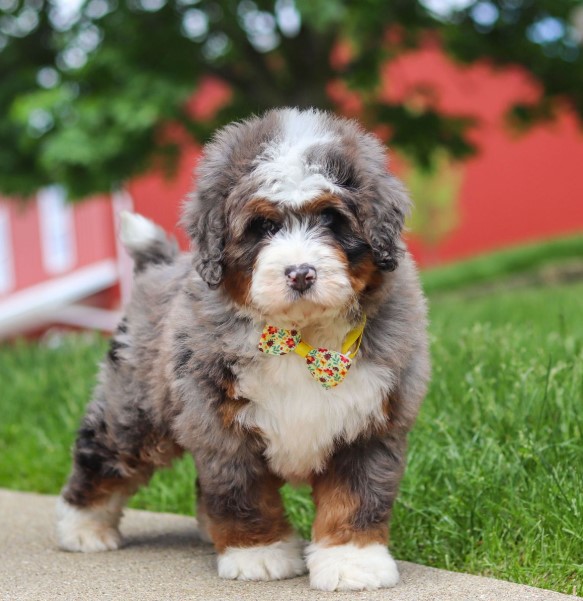
Mini Bernedoodles have officially taken the crown as the most requested designer dog of the 2020s. Tri-color panda face? Check. Berner gentleness + Poodle brain + “mini” size? Check. Instagram-worthy fluff that looks like a living Build-A-Bear? Triple check.
But here’s what 99 % of the cute Reels don’t show you:
- That 8-week “mini” puppy will probably be 45–55 lbs at maturity
- The grooming bill will rival your car payment
- The teenage phase lasts until age three and will test every ounce of your patience
- Poor breeding can still give you a dog with cancer at six
This is the unfiltered, no-sponsor, no-BS guide written in December 2026 after watching thousands of these puppies grow up.
The Hard Truth About “Mini” in 2026
| Claim You’ll Hear | 2026 Reality (from actual adult data) |
|---|---|
| “Guaranteed 20–35 lbs” | Only ~12 % of puppies from even the best programs stay under 35 lbs |
| “True mini – both parents under 40 lbs” | If the Bernese parent was under 75 lbs, it probably wasn’t pure |
| “Toy/Mini Poodle used” | Many are actually small Standards (45–60 lbs) mislabeled |
| “F1b reverse = smallest” | True, but only if the Poodle was legitimately Toy (under 10 lbs) |
Realistic adult weights from ethical programs in 2026:
- Petite females: 24–34 lbs (rare)
- Average females: 35–48 lbs
- Average males: 42–58 lbs
- “Oops” litter runts turned giants: 60–90+ lbs (happens constantly)
If a breeder shows you zero full-grown adults from identical lines that match their size claims, run.
Puppies: Adult Mini Bernedoodles
Generations Explained (2026 Version)
| Generation | Mix % Bernese : Poodle | Adult Weight Range | Shedding Level | Price Range 2026 |
|---|---|---|---|---|
| F1 | 50:50 | 50–90+ lbs | Moderate–high | $3,500–$5,500 |
| F1b | 25:75 | 30–60 lbs | Low–very low | $5,500–$8,500 |
| F1bb | 12.5:87.5 | 25–50 lbs | Very low–none | $6,500–$9,500 |
| Multigen | Complex | 28–55 lbs | Low–very low | $5,000–$9,000+ |
The sweet spot for most families in 2026 is a well-bred F1b from health-tested parents.
Coat Types – What You’ll Actually Get
- Straight (“Berner coat”) – sheds, looks traditional
- Loose wave (“fleece”) – minimal shedding, easiest maintenance
- Open wave/loose curl – low shedding, gorgeous movement
- Tight curl (“wool”) – zero shedding, mats in 48 hours if not brushed
2026 trend: Breeders are selecting heavily for the loose-wave fleece coat because it’s the unicorn combination of beauty + manageability.
The Personality You’re Actually Buying
What you get when you combine Berner soul + Poodle brain:
The angelic side
- Therapy-dog level empathy (many become certified by age two)
- Gentle and patient with children (the “nanny dog” stereotype is real)
- Deep, almost human eye contact that will ruin you emotionally
- Calm indoors once exercised – they invented the “off switch”
- Will choose cuddling you over anything else on earth
The chaotic side
- Separation anxiety is practically baked in (70 %+ of owners report it)
- Dramatic groaning, huffing, and “talking” when they want attention
- Stubborn streak wider than the Mississippi
- Resource guarding possible if not trained early
- Teenage rebellion lasts until 30–36 months (yes, really)
Finding an Ethical Breeder in 2026 (Red Flags vs Green Flags)
Red flags (close the tab immediately)
- Puppies available “right now”
- Price under $5,000 for F1b/multigen
- “Imperial” or “micro mini” marketing
- No echocardiogram on the Bernese parent
- No public adult photos from previous litters
- Merle Bernedoodles (double merle risk = blind/deaf puppies)
Green flags (worth the 18–24 month waitlist)
- Full OFA Excellent/Good hips + elbows OR PennHIP ≤0.35
- Echocardiogram clear on Bernese parent
- DNA clear by parentage or test for vWD, DM, SDCA1/2
- Parents have therapy, CGC, or drafting titles
- Puppies leave 9–12 weeks with ENS and sound socialization
- Breeder asks YOU more questions than you ask them
- Lifetime take-back clause in contract
The First Year Survival Guide
Weeks 9–16 (The Angel Phase)
- Sleeps 18–20 hours/day
- House training 60 % reliable by week 14 with crate + bells
- Socialization window – expose to 100 people, 50 surfaces, 30 sounds
Months 4–12 (Land Shark → Kangaroo Phase)
- Teething = everything is a chew toy (including your arms)
- Random fear periods at 6–9 months
- Leash reactivity possible if not walked daily
- Growth plates still open – NO jogging, repetitive stairs, or dog park wrestling with big dogs
Year 1–3 (The Teenage Apocalypse)
- Selective deafness becomes an Olympic sport
- Counter-surfing with 40-inch vertical
- Stranger danger phase (Berner reserve kicks in hard)
- Many owners rehome at 14–20 months – this is when the good ones double down on training
Grooming – The Expense Nobody Talks About
Annual cost breakdown (real 2026 numbers):
| Expense | Cost per Year | Notes |
|---|---|---|
| Professional grooming | $1,200–$2,400 | Every 6–8 weeks @ $100–$180/visit |
| Home tools (one-time) | $400–$800 | Clippers, brushes, dryer |
| Ear cleaner/plucking | $150–$300 | Chronic yeast factory |
| Teeth brushing supplies | $200 | Dental disease is epidemic |
| Total first year | $2,500–$4,000+ | And it never goes down |
Exercise & Mental Requirements
Puppies (0–18 months):
- 5–15 minute walks 3–4× daily
- NO forced exercise
Adults (18 months+):
- 90–150 minutes daily minimum – 45–60 min structured walk/hike – 30–60 min play (fetch, flirt pole, swimming) – 20–40 min brain work (scent games, carting, tricks)
Sports they dominate in 2026:
- Carting/drafting (Berner heritage)
- Scent work/nosework
- Rally/obedience
- Barn hunt
- Therapy work
Health Realities in 2026
Average lifespan from top programs: 13–16 years Still possible: cancer (reduced but not eliminated), hip dysplasia, cardiac issues, bloat
Mandatory testing you should demand proof of:
- OFA or PennHIP on both parents
- Echocardiogram (not just auscultation) on Bernese parent
- DNA panel (vWD, DM, SDCA1/2, PRA)
- Annual eye CERF on breeding dogs
Pet insurance is non-negotiable – a single mast cell tumor treatment can exceed $15,000.
Frequently Asked Questions (FAQ) – 2026 Edition
How big do Mini Bernedoodle puppies actually get in 2026?
From ethical breeders: 28–58 lbs, average 38–48 lbs.
Do they really not shed?
F1b and later: very little to none if wavy/curly. Straight-coated ones shed seasonally.
Are they hypoallergenic?
Among the best options for mild allergy sufferers, but no dog is 100 %.
How much do Mini Bernedoodle puppies cost right now?
Ethical programs: $5,800–$9,800 USD (yes, really). Retired adults: $2,000–$5,000.
Are they good with kids and other pets?
Usually exceptional when socialized early. Berner gentleness shines through.
Do they bark a lot?
More “talkers” than barkers – dramatic groans, huffs, and woo-woo sounds.
Can they live in apartments?
Yes, with owners committed to 2+ hours of daily activity.
When do they finally calm down?
Physically ~2.5 years, mentally ~4–5 years. Many stay playfully puppy-ish forever.
Are phantom or merle Bernedoodles safe?
Phantom yes. Merle in Bernedoodles is highly controversial and often produces health issues.
Is F1 healthier than F1b?
No – F1 has more shedding and shorter lifespan on average. F1b/multigen is the health/shedding sweet spot.
Conclusion: Is a Mini Bernedoodle Puppy Your Dog?
A Mini Bernedoodle puppy is not a purchase. It is a 15-year emotional investment that will cost you $30,000–$60,000 all-in and reward you with a love deeper than most human relationships.
You will become “that person” who cries when their dog sighs in their sleep. You will schedule your vacations around grooming appointments. You will learn to line-comb a dog while watching Netflix because mats wait for no one. You will have a 45-pound shadow who knows when you’re sad before you do.
But you will also have:
- A therapy dog who chooses you every single day
- A hiking buddy who carries his own backpack
- A child’s best friend who lets them use him as a pillow
- A reason to come home early for the rest of your life