Dachshunds — those bold, sausage-shaped bundles of personality — have stolen hearts for centuries. Originally bred in Germany to hunt badgers (hence the name: Dachs = badger, Hund = dog), these tiny dogs with oversized courage are now one of the most beloved companion breeds worldwide. But don’t let the short legs and soulful eyes fool you: a Dachshund puppy is a big personality in a small package.

Whether you’re dreaming of a smooth, long-haired, or wire-haired miniature or standard, this in-depth guide covers every aspect of raising a happy, healthy Dachshund puppy — from choosing the right one to training, health, grooming, and life with a “Doxie,” plus a comprehensive FAQ section and final thoughts.
Why Choose a Dachshund Puppy?
Dachshunds consistently rank in the top 15 most popular breeds (AKC, KC, VDH) for good reasons:
- Huge personality: fearless, clever, funny, and affectionate
- Adaptable size: Miniatures (under 11 lbs) and Standards (16–32 lbs)
- Three coat types: Smooth, Long-haired, Wire-haired — each with its own charm
- Excellent watchdogs in a small body — they will alert you to everything
- Surprisingly sturdy and athletic despite the long back, can live 12–16 years (many reach 17–20!)
- Comedian-level entertainment value — Doxie zoomies and dramatic expressions are legendary
But they are not for everyone. They can be stubborn, vocal, and prone to back problems if not cared for correctly. Let’s dive deep.
Types of Dachshunds: Which One Is Right for You?
- Size
- Miniature: ≤ 11 lbs (5 kg), 5–6 inches at shoulder
- Standard: 16–32 lbs (7–14.5 kg), 8–9 inches at shoulder
- “Tweenie”: unofficial category 11–16 lbs (very common)
- Coat Types
- Smooth: shortest, lowest maintenance, shiny coat
- Long-haired: silky, elegant, needs regular brushing and occasional trimming
- Wire-haired: scruffy, weather-resistant coat, needs hand-stripping or clipping 2–3 times a year
- Colors & Patterns Red, black & tan, chocolate & tan, dapple (merle), brindle, sable, piebald, wild boar (wires). Some patterns (double dapple) carry health risks — avoid breeders who produce double-dapple (“double merle”) puppies.
Puppies: German Shepherd Puppies
Choosing a Reputable Dachshund Breeder
Never buy from puppy mills, pet stores, or backyard breeders. A responsible Dachshund breeder will:
- Be registered with the national Dachshund club (Dachshund Club of America, Deutscher Teckelklub, British Dachshund Club, etc.)
- Health-test parents for:
- PRA (Progressive Retinal Atrophy — cord1 mutation DNA test)
- Osteogenesis Imperfecta (“brittle bone” in dapple lines)
- Lafora disease (late-onset epilepsy common in wires/minis — DNA test available)
- Patellar luxation and eye exams
- IVDD risk reduction through careful lineage selection
- Allow you to meet both parents (or at least the dam) and see where puppies are raised
- Provide a written health guarantee, vaccination/deworming records, and microchip
- Ask YOU questions — good breeders screen homes as carefully as you screen them
Red flags: multiple litters at once, “rare” colors marketed at premium prices, puppies available before 10–12 weeks, no health testing.
Bringing Your Dachshund Puppy Home (10–16 Weeks)
Most responsible breeders keep Dachshund puppies until at least 10 weeks — some until 12 — because the breed benefits enormously from extra time with mom and littermates. This reduces biting issues and improves emotional stability.
The First 48 Hours
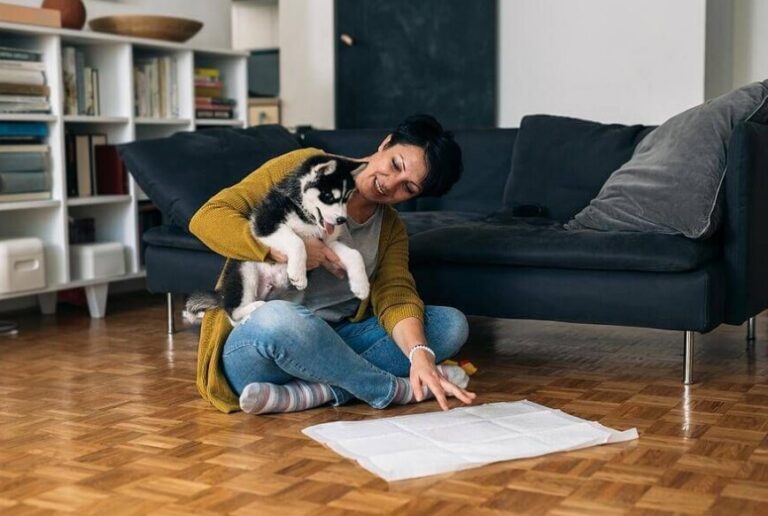
- Set up a safe zone: playpen or crate with pee pads or litter box (many Doxies are litter-trained by good breeders)
- Keep the environment calm — no overwhelming visitors yet
- Feed exactly what the breeder was feeding for at least 2 weeks
- Schedule a vet check within 72 hours
Essential Puppy Gear
- Flat collar/harness (never a neck-lead on a Dachshund — use a Y-harness)
- 4–6 ft lightweight leash
- Crate (24–30″ for minis, 30–36″ for standards)
- Orthopedic bed or ramp for furniture (IVDD prevention starts day one
- Puzzle toys (Kong Wobbler, snuffle mats — Dachshunds are scent geniuses)
House Training a Dachshund Puppy
Dachshunds have tiny bladders and a stubborn streak. Success tips:
- Take them out every 1–2 hours + after eating, drinking, playing, waking
- Use a consistent door and verbal cue (“Go potty!”)
- Many owners successfully litter-box train minis (using dog litter or pellet systems)
- Crate training at night prevents accidents
- Never punish accidents — they shut down and hide future mistakes
- Most are reliable by 5–7 months with consistency
Training & Socialization: The Stubborn Myth
Yes, Dachshunds can be independent thinkers, but they are also highly food- and praise-motivated. They excel at:
- Obedience (many earn CDX and OTCh titles)
- Earthdog, barn hunt, scent work (their original purpose shines)
- Agility (miniatures especially)
- Therapy work (their empathy is underrated)
Rules for success:
- Start training day one with 2–3 minute sessions
- Use high-value treats (chicken, cheese, liver)
- End every session on a win
- Never use harsh corrections — they remember and hold grudges
- Socialize intensively between 8–16 weeks: carry them in a sling to pet stores, outdoor cafés, parks
Health & IVDD Prevention — The Most Important Section
Intervertebral Disc Disease (IVDD) is the #1 health concern in Dachshunds. 19–25% will experience some degree of back trouble in their lifetime. You can drastically reduce risk:
Do:
- Keep puppy lean (you should feel but not see ribs)
- Use ramps or stairs for couch/bed from day one
- Discourage jumping on/off furniture
- Carry correctly: one arm under chest, one under rear (“the sausage hold”)
- Maintain strong core muscles through controlled exercise
- Consider chiropractic or hydrotherapy later in life
Avoid:
- Letting puppies climb full flights of stairs repeatedly
- Rough play with large dogs
- Obesity — every extra pound multiplies spinal stress
Other common health issues:
- Eye disease (PRA, cataracts) — buy only from DNA-tested lines
- Epilepsy (especially wires/minis) — Lafora screening
- Patellar luxation
- Dental disease — start tooth brushing early
Grooming by Coat Type
Smooth: Weekly brush, occasional bath, nail trims every 2–3 weeks Long-haired: Daily brushing to prevent mats, professional grooming every 8–12 weeks Wire-haired: Hand-stripping 2–3 times/year (or clippering — less ideal for coat health), regular ear cleaning (prone to yeast)
All types need ears cleaned weekly (deep floppy ears trap moisture) and nails kept short (long nails change spine alignment).
Exercise & Mental Stimulation
Dachshunds are not lap ornaments. They need:
- 30–60 minutes daily walking (split into 2–3 walks)
- Nose work games — they were born for it
- Food puzzles, flirt pole (low-impact), short agility sequences
- Avoid high-impact jumping until 12–18 months
A bored Dachshund is a destructive, barking Dachshund.
Frequently Asked Questions (FAQ)
How long do Dachshunds live?
12–16 years is average; many smooths and minis reach 17–20 with excellent care.
Are Dachshunds good with children?
They can be wonderful with respectful children, but are not “nanny dogs.” Small kids who grab tails or try to pick them up incorrectly can cause injury or defensiveness. Best with kids 6+.
Do they bark a lot?
Yes — they have a surprisingly big voice and love using it. Early training (“Quiet” cue + reward silence) is essential.
Are they hard to housebreak?
They can be challenging but not impossible. Consistency + positive reinforcement works.
Can Dachshunds be left alone?
4–6 hours max once adult and crate-trained. They are velcro dogs and can develop separation anxiety.
Are they hypoallergenic?
No breed is truly hypoallergenic, but wires and smooths shed less than long-hairs.
Do they get cold easily?
Yes, especially smooths and minis. Coats/sweaters are necessary in winter.
Can they swim?
Many love water, but their body shape makes them poor swimmers. Always use a life jacket.
How much do Dachshund puppies cost?
From health-tested parents: $1,500–$4,000 USD / €1,400–€3,500 / £1,200–£3,000 depending on country, coat, color, and titles. Beware anything under the lower end — likely no health testing.
Are two Dachshunds better than one?
Often yes — they entertain each other and reduce separation anxiety — but only after the first is fully trained.
Do they dig?
Relentlessly if bored. Provide a digging pit or sandbox to redirect the instinct.
Conclusion: Is a Dachshund Puppy Right for You?
A Dachshund is not a beginner dog in a cute suit. They are brilliant, opinionated, and demanding in their own way. They will make you laugh every single day, alert you to the mailman with Oscar-worthy drama, and sleep curled against your neck like a living hot-water bottle.
But they require:
- Commitment to lifelong back-care precautions
- Patience during house training and teenage rebellion (yes, they have one around 9–18 months)
- Dedication to mental stimulation (or they will redecorate your sofa)
- Acceptance that you will never eat a sandwich unobserved again
If you’re ready for a small dog with the heart of a lion, a clown’s sense of humor, and the loyalty of a shadow, then congratulations — you’re about to join one of the most passionate dog communities on earth.